The facsimile’s painted wall and, projected just below it, a face whose gaze rises towards the animals

The project

A journey into one of the greatest sanctuaries of prehistoric art

Our goal: to transmit and share with audiences everywhere the legacy of Lascaux, a UNESCO World Heritage site and one of humanity’s oldest and most precious cultural treasures.

© N. Grenet

The new Lascaux exhibition (2025) takes up a new challenge: the replica of an entire chamber of the cave, the Hall of the Bulls.

For the first time, the exhibition presents a full-scale replica of an entire chamber of Lascaux Cave: the legendary Hall of the Bulls. This monumental facsimile forms the heart of the new exhibition.

Detail of the facsimile’s painted wall: a red deer, horses and signs
The facsimile of the Hall of the Bulls. © D. Nidos — CD24

Visitors are invited to enter a unique immersive journey into one of the most extraordinary sanctuaries of prehistoric art — a place where art, imagination and humanity first took monumental form.

The Hall of the Bulls

More than simply a facsimile: an immersive experience

25 meters (82 ft) of continuous wall surface, and inside, an immersive show telling the thousand-year-old history of Lascaux.

Light projections on the walls, spatialized sound and motion design animations bring the painted figures to life.

An immersive experience that highlights the paintings, the techniques and gestures of prehistoric artists, and reveals the close bond between animals and humans 21,000 years ago.

The audiences

A “universal” exhibition

Lascaux is a family-friendly exhibition that speaks to every age group and every audience — children from the age of two included.

Lascaux carries a universal and timeless message, reminding us that cave art does not belong solely to the past; it speaks to us of our place in the world as a living species, and it honours life itself.

Families around a sloping workshop table, adults and children drawing side by side
The drawing workshop, open to every age. © N. Grenet

The visit

8 sections

The visit offers an arts, science and archaeology approach, with displays (models, interactive games, films, touchscreens, archaeological artefacts, and more).

The stages of the visit are the history of the discovery of cave art, the geology and archaeology of Lascaux, the ways of life of Late Palaeolithic societies in Europe, their landscapes, the depiction of the Lascaux Magdalenians through hyper-realistic sculptures, and the history of cave replication techniques with a look behind the scenes at how facsimiles are made.

A father and child in front of the “An extraordinary discovery” module, showing archive photographs of the cave’s discoverers
Module 01

An extraordinary discovery

Experience at first-hand the excitement of discovering Lascaux! Exclusive archive photographs will immerse you in the adventure that changed our perception of prehistoric art, from its revelation to the world in 1940 to the closure of the cave in 1963.

Two visitors seated in front of the “The art of reproduction” module, where a film shows a facsimile under construction

© D. Nidos — CD24

Module 02

The art of reproduction

Plunge into the fascinating history of replicas and discover the unique expertise of the Périgord region in creating these masterpieces of precision.

A three-dimensional model of the Lascaux cave, lit in the darkness of the module

© D. Nidos — CD24

Module 03

At the very heart of Lascaux

Explore the cave in 3D just as it was 21,000 years ago! An interactive model and immersive film guide you through every recess of the prehistoric sanctuary and its natural environment.

Three visitors facing the Panel of the Imprint, where blue lighting reveals the engravings

© D. Nidos — CD24

Module 04

The art of engraving

Marvel at the complexity of the Panel of the Imprint, where animated lighting reveals thousands of engravings before your eyes.

A child using a touch table in front of a drawn wall, in the module devoted to techniques

© D. Nidos — CD24

Module 05

Understanding the techniques

Become a Lascaux artist: try out their techniques through interactive games and hands-on activities accessible to all.

A conservator in a sterile suit examining the cave wall by headlamp

© D. Nidos — CD24

Module 06

The guardians of Lascaux

Go behind the scenes of this exceptional UNESCO site. Meet the guardians dedicated to its daily preservation and the scientists who study it.

© D. Nidos — CD24

Module 07

Life 21,000 years ago

Step back in time! Objects and remains discovered in the cave provide fascinating insight into the daily life of human societies in the time of Lascaux.

© D. Nidos — CD24

Module 08

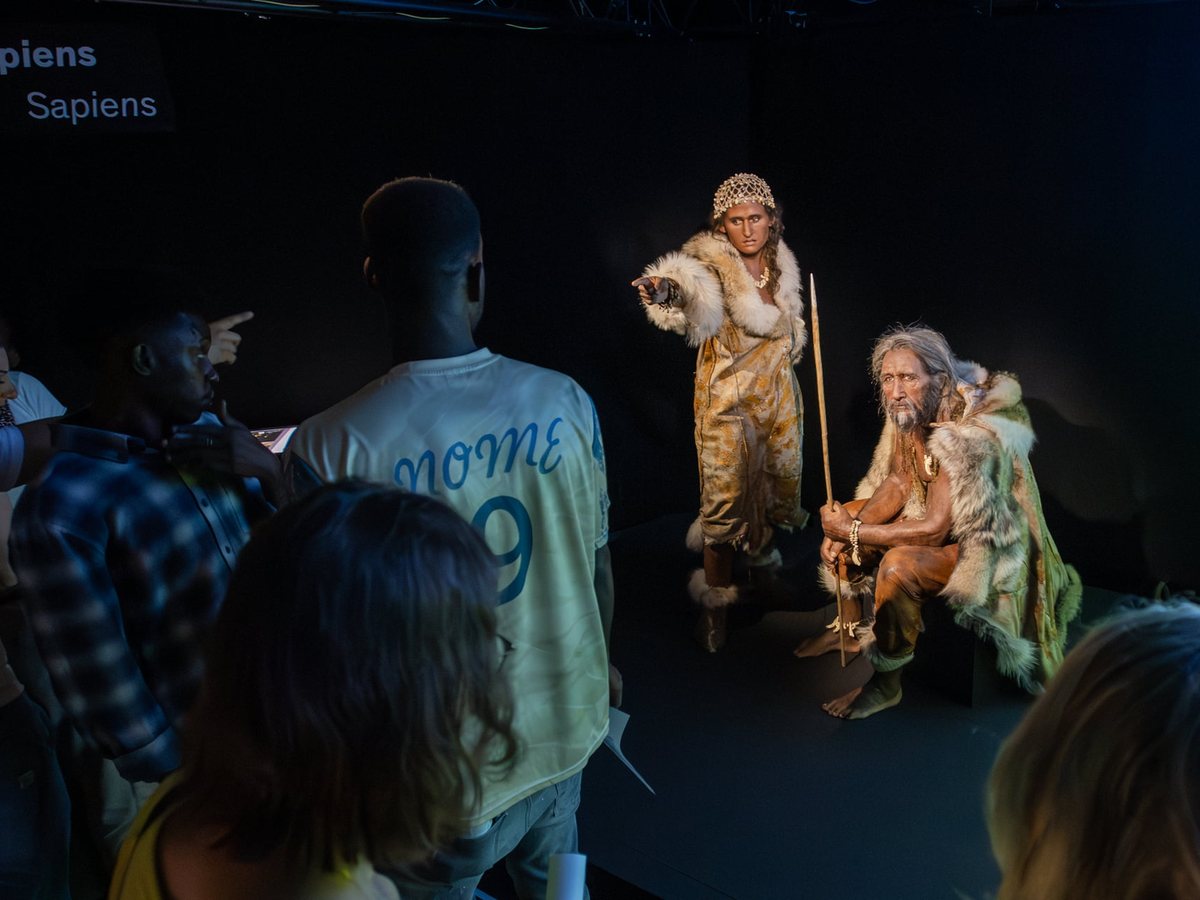
Meet Sapiens

Prepare for an unforgettable face-to-face encounter with four hyper-realistic sculptures from the time of Lascaux, created by artist Élisabeth Daynès.

The exhibition’s virtual reality room, where visitors wearing headsets explore the cave
Optional

Virtual reality experience

The optional VR experience offers a 20-minute immersive journey inside the prehistoric cave of Lascaux. Guided by voice, light and hand interaction, visitors explore the underground world independently and access every gallery — even the deepest and most inaccessible areas of the cave.

Also on display

Exceptional loans of original archaeological objects from Lascaux

Depending on the host venue, the exhibition may also be enriched by exceptional loans of original archaeological objects from major French collections connected to Lascaux and the Paleolithic period, including the National Museum of Prehistory in Les Eyzies, the National Archaeology Museum in Saint-Germain-en-Laye, and the Institute of Human Paleontology in Paris.

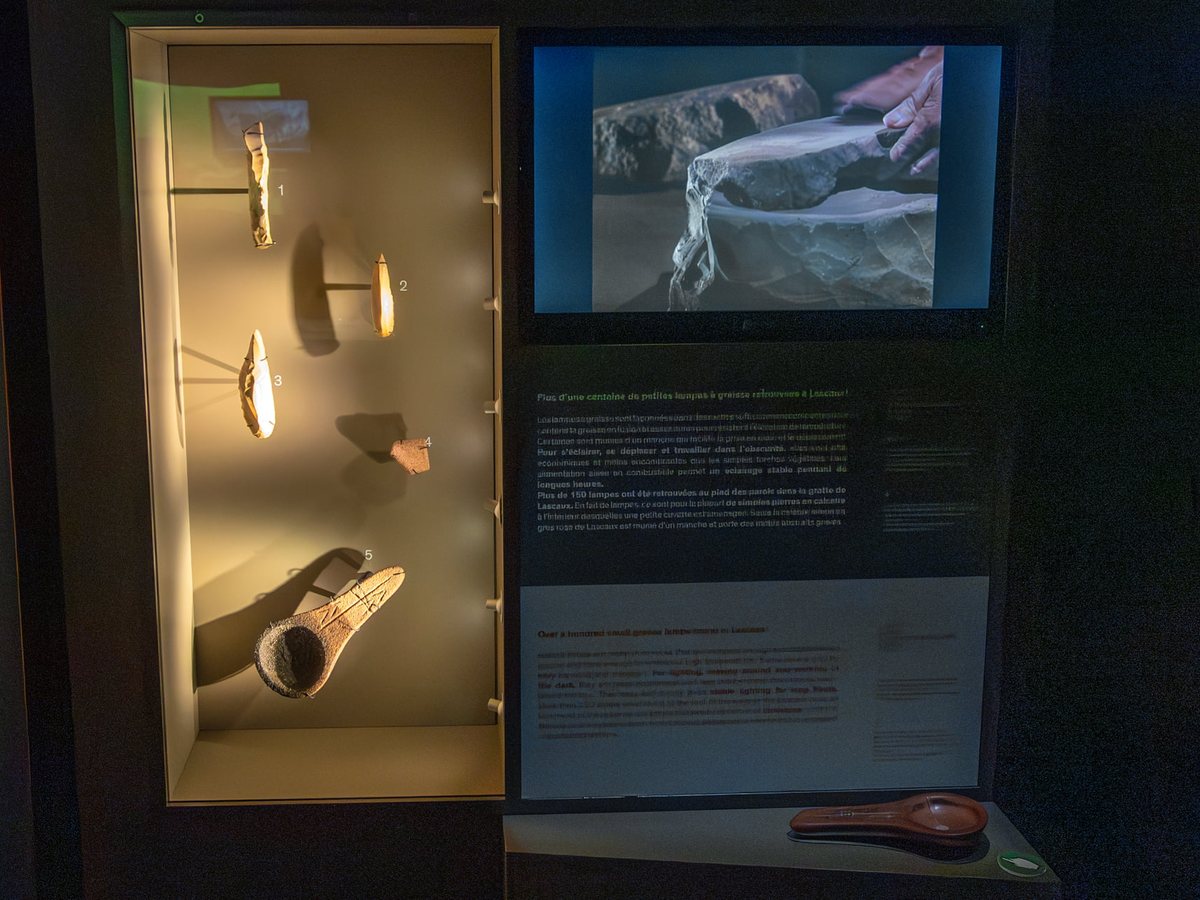
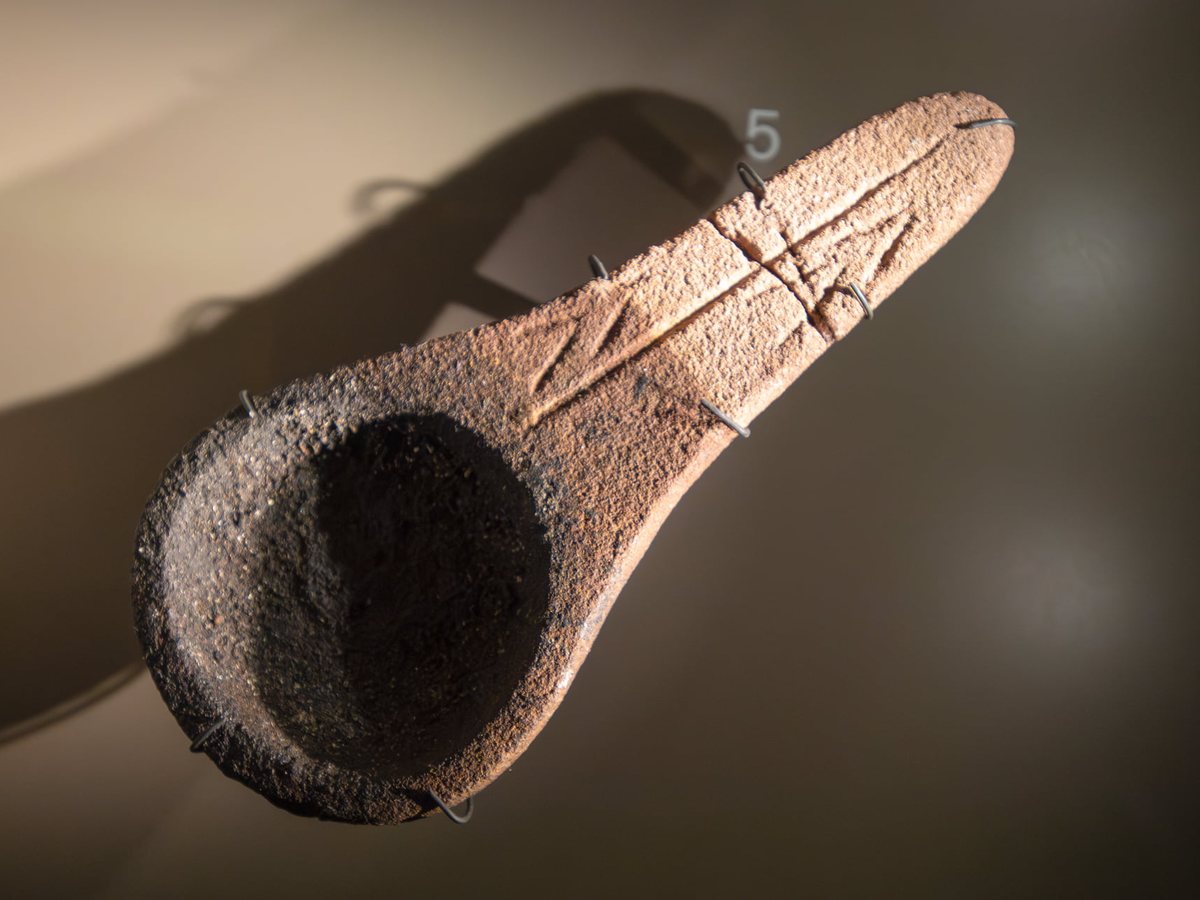
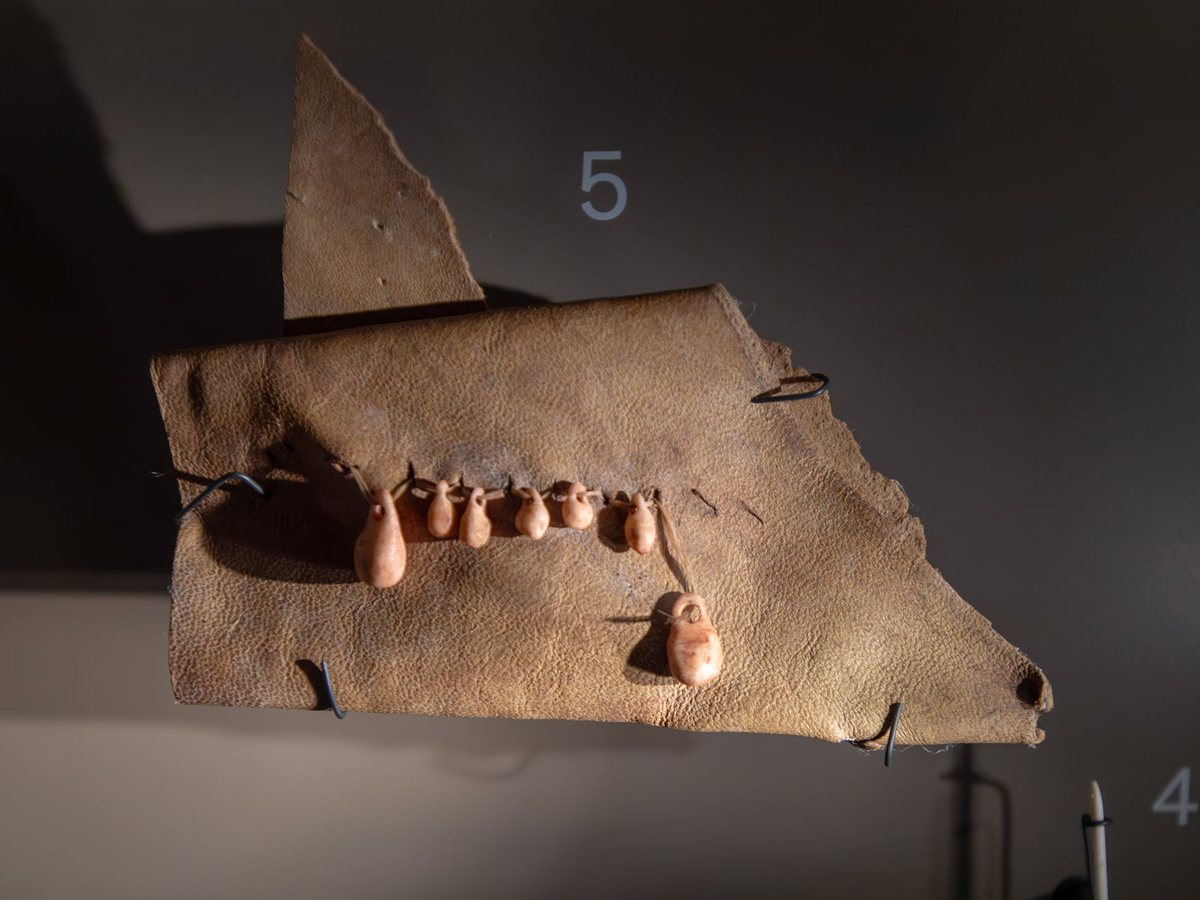
Stone lamps, pigments, spear points, flint and bone tools, ornaments and other objects related to the gestures of prehistoric painters and engravers can complement the facsimiles. These original pieces remind visitors that Lascaux is not only a masterpiece of cave art, but also a major archaeological site, deeply rooted in the daily life, skills and symbolic world of Magdalenian communities.

  • Coloring materials found on the floor of Lascaux Cave
  • Personal ornaments: colored shells, pierced shells, engraved bone pendants
  • Stone lamps discovered inside the cave
  • Flint tools: blades and bladelets
  • Magdalenian tools made from reindeer antler: barbed harpoons, spear points, needles and other implements
Pierced shell bearing traces of red ochre
Pierced shell, Lascaux Cave. © Collection Musée national de Préhistoire, Les Eyzies, Dordogne, France
Long, tapered antler spear point
Spear point (display stand-in), Lascaux Cave. © Collection Musée national de Préhistoire, Les Eyzies, Dordogne, France
A visitor wearing a headset raises her hand towards the horse on the wall
A visitor wearing a headset in the virtual reality experience. © Frédéric Barreau

Step inside Lascaux in Virtual Reality

The Virtual Reality Experience offers another way to enter Lascaux: more intimate, more individual, like a virtual journey through the closed cave.

Lasting around twenty minutes, this fully immersive experience takes visitors deep inside the prehistoric cave of Lascaux. Equipped with a VR headset, each visitor can move freely from gallery to gallery, guided by the voice of an imaginary Magdalenian artist. The narration evokes the moment, more than 20,000 years ago, when people discovered the cave’s pristine white walls and, through their gestures, brought horses, aurochs and other figures to life.

Created during the Covid period, the VR experience remains a powerful complement to the exhibition. It offers visitors a rare opportunity to explore the entire cave, from the entrance to its deepest and most inaccessible galleries, using the digital model of the original site. In 2025–2026, the experience is being transferred to new Pico headsets and updated technically, visually, scenographically and sound-wise to offer an even more fluid and immersive encounter with Lascaux.

The virtual reality experience at the Museum of Prehistory of Valencia
The experience at the Museum of Prehistory of Valencia, Spain, 2025. © Musée de Préhistoire de Valence, Espagne
The virtual reality experience at the Museum of Prehistory of Valencia
The experience at the Museum of Prehistory of Valencia, Spain, 2025. © Musée de Préhistoire de Valence, Espagne